

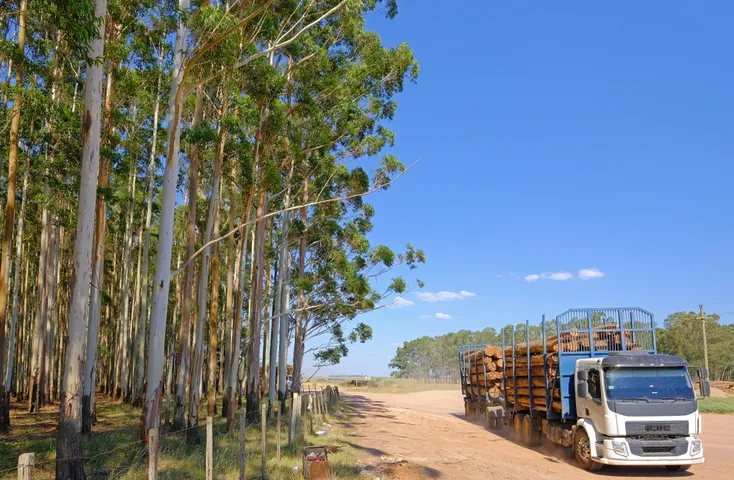
Uruguay has witnessed a significant transformation in its export industries, with its forest economy emerging as a dominant force, surpassing traditional sectors like beef. This shift is underscored by the impressive figures from the previous year, where wood pulp exports reached $2.5 billion, constituting an impressive 20% of the country's total exports. This transition marks a pivotal change in the nation’s economic landscape.
Uruguay's strategic focus on particular markets, especially China, has been instrumental in this growth. A substantial 42% of Uruguay's wood pulp exports are destined for China, underscoring a robust trade relationship. This strong market connection has been a cornerstone of Uruguay's export strategy, highlighting the country's ability to adapt and align its production capabilities with global demand. The burgeoning economic ties with China not only offer immediate financial benefits but also cement Uruguay's position as a significant player in the global forestry sector.
China's demand for wood pulp, driven by its vast manufacturing sector and growing paper and packaging needs, presents a lucrative opportunity for Uruguay. Furthermore, the country's stable political environment and favorable trade policies have facilitated this burgeoning trade relationship. As Uruguay continues to nurture and expand its forestry exports, maintaining this strategic focus on target markets like China will be crucial for sustained economic growth.
Beyond just numbers, this strategic market expansion can serve as a blueprint for other sectors. By prioritizing strong bilateral relations and understanding the dynamics of target economies, countries like Uruguay can enhance their export portfolios and gain a competitive edge on the international stage.
Moreover, the efforts to scale up exports align seamlessly with Uruguay's commitment to diversifying its economic base, ensuring resilience against global economic fluctuations. By hedging its bets on both traditional and emerging markets, Uruguay is positioning itself for a sustainable economic future.
In light of global climate change challenges, Uruguay has also outlined ambitious environmental plans, emphasizing sustainability as a core component of its forestry economic strategy. As part of its climate change initiatives, Uruguay is set to increase its forest plantation area by a notable 20% by 2035 compared to the 2020 levels. This planned expansion not only denotes the nation’s commitment to environmental sustainability but also highlights the essential role of forestry in addressing climate-related concerns.
Through increased afforestation, Uruguay aims to enhance carbon sequestration, contributing significantly to the global fight against climate change. This commitment resonates with international climate goals and demonstrates Uruguay's leadership in integrating environmental consciousness into economic planning. The expansion also has positive implications for biodiversity, providing rich ecosystems for various species and promoting ecological balance.
Uruguay's strategic plan goes beyond mere expansion; it involves improved forest management practices, ensuring that the growth of forest plantations is conducted in an environmentally friendly and sustainable manner. By focusing on these aspects, Uruguay not only bolsters its environmental credentials but also ensures that its forestry sector remains productive and viable for the long term.
The growing emphasis on sustainable forestry is also an attractive proposition for environmentally-conscious investors and businesses. As consumer awareness and scrutiny on environmental impact increase, Uruguay’s commitment to sustainable forestry practices positions it favorably in the eyes of global investors and partners.
The expansion of eucalyptus plantations plays a central role in this strategy, with projections indicating potential growth to over 1.8 million hectares of forestland by 2050. Lucia Basso, the president of Uruguay’s Society of Forest Producers, has highlighted the extensive potential for eucalyptus, a species prized for its rapid growth and adaptability. This potential further underscores Uruguay’s capability to not only meet global demands but to do so in a manner that aligns with ecological and sustainable practices.
In conclusion, Uruguay's swift rise in the forestry sector, backed by strategic market alignments like those with China, and its commitment to sustainable environmental practices showcase a model of economic adaptation and growth. This shift not only supports its economy but also reinforces Uruguay's role as a proactive participant in addressing global climate challenges. With continued focus and investment, Uruguay is poised to maintain its momentum in the forestry export industry while adhering to its sustainability goals.