yesterday at 12:29
,Germany
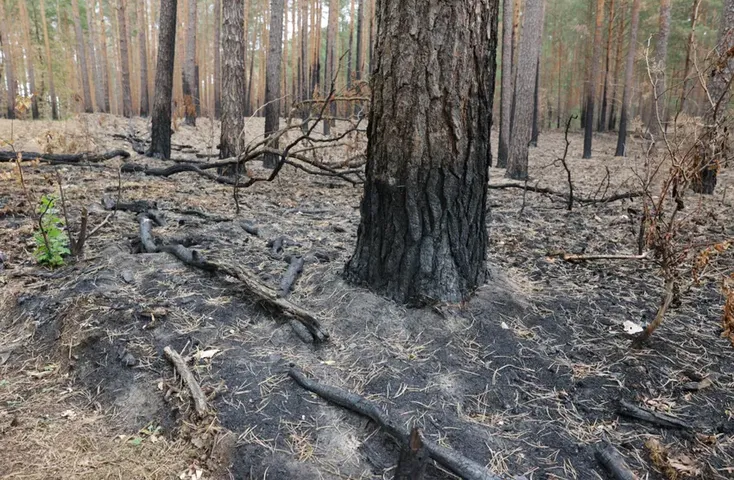
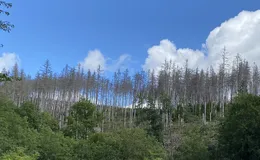
When the message "Fire out!" finally came after almost two weeks in the Gohrischheide, the work was far from over. What remained were burned forests, destroyed heathlands, and damaged trees. This raises a central question: What happens to the wood – and why is it so often burned?
Forest fires in Europe have recently reached record levels. According to the European Forest Fire Information System EFFIS, around 10.3 million hectares of forest burned in the EU in 2025 – more than ever before since 2006. The main causes are heat and drought. The smoke also impacts air quality and health.
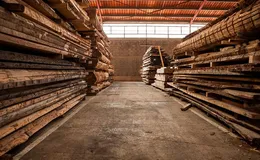
With the fires, the amount of burned wood increases. Often, large areas are cleared, even if trees are only slightly damaged. One reason is pyrophilic insects like the black pine sawyer beetle, which further endanger weakened stands. However, high-quality uses for the resulting wood are often lacking.
A key obstacle lies in processing. Soot and particles on the logs interfere with laser-based measurements in sawmills. Wood that cannot be reliably sorted is usually discarded and used as firewood – even though it would fundamentally be suitable as a construction material.
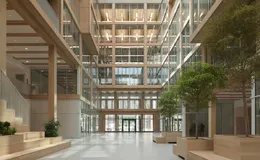
An alternative approach is presented by the "Forest & Phoenix" project from the Technical University of Berlin. The thesis designs a forest fire competence center in Brandenburg with the goal of specifically using wood from burned areas in construction and creating regional added value.
For material enhancement, the authors mention Yakisugi, a Japanese technique in which wood is deliberately charred. This makes the surface more resistant to pests, moisture, and, to some extent, fire – a potential way to make burned wood usable for longer.
The planned location in Beelitz is intended as an interface between forestry, experts, and the public. Plans include an information area, training for emergency responders, and a wooden observation tower equipped with research tools and a public viewing platform.
The ambition is societal: Beyond knowledge about forest fires, the focus is on prevention and fostering a better understanding of forests. For such concepts to become reality, however, pilot projects, clear testing and sorting standards, and collaborations with sawmills and timber construction are needed. After all, wood remains a material of the future – even after forest fires.