yesterday at 12:29
,Germany
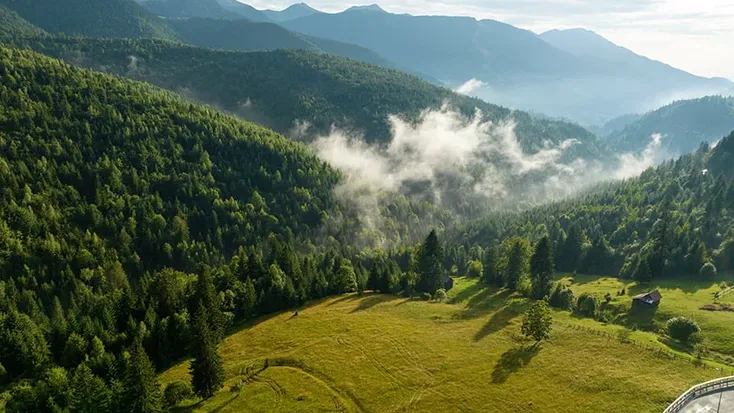
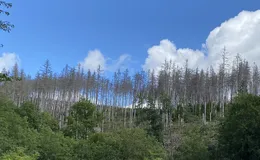
Since 2015, the world has lost an average of 10.9 million hectares (ha) of forest each year, according to the "Global Forest Resources Assessment 2025" report by the United Nations (UN). Deforestation has been most severe in South America and Africa, largely due to agricultural production, but Romania is among the countries where forest-covered areas have increased.
In Brazil, cattle ranching and the expansion of pastures have played a major role in the deforestation of the Amazon. With a loss of over 2.9 million ha of forest, Brazil accounts for by far the largest share of deforestation since 2015. Although the rate of deforestation has slowed, the scale of the losses is greater than that of the next nine countries combined.
A promising sign, however, comes from Brazilian authorities: President Lula da Silva intends to reduce deforestation to zero by 2030. Brazil has a forest area of 486 million hectares, making it the second largest in the world.
On the African continent, Angola recorded a loss of 510,000 hectares, while Congo lost 283,000 hectares. Across the region, "slash-and-burn" agriculture is common, used for both forestry and agricultural purposes.
In Asia, Myanmar has recorded the highest rate of deforestation, known for its abundance of teak wood. Cambodia reported the fastest rate of loss in the group, with an average of 3.3% in annual net change—more than four times higher than Brazil.
Romania stands out with a positive long-term trend. The country’s total forest area has shown consistent growth over the 35 years analyzed in the report. In 1990, the forest area was 6.37 million hectares, and by 2025, it has increased to over 6.95 million hectares.
The highest rate of afforestation growth was recorded between 2000 and 2015, with an annual rate of 0.54%. In the more recent period, 2015–2025, the net growth rate has slowed significantly, to 0.08%.
In a global context dominated by massive forest losses, Romania represents a success story, demonstrating that local policies and reforestation efforts can yield visible results. At the same time, initiatives like Brazil’s plan to reduce deforestation to zero by 2030 offer hope for the stabilization and regeneration of forests worldwide.