
yesterday at 12:29
,Germany
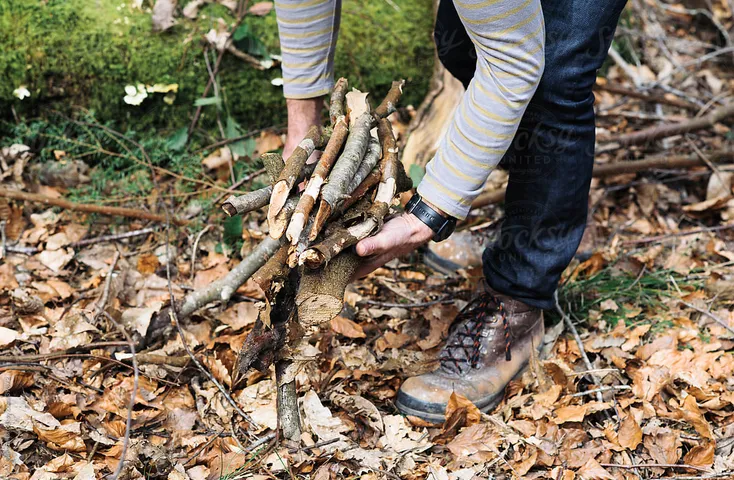
The price of firewood continues to rise. To ease the cost, some are tempted to "collect free wood" in forests, thinking it’s a harmless act. In France, however, this practice is strictly regulated and can be illegal, even when it involves dead wood.
Branches on the ground, fallen trunks, dead wood: many consider these elements as abandoned and freely recoverable. In reality, wood present in forests is never free of rights. The French forest, which covers nearly 17 million hectares, consists of private and public forests, both subject to strict rules.
In private forests, taking wood without the owner’s consent constitutes unauthorized appropriation, legally equivalent to theft. Penalties can reach up to three years in prison and a 45,000-euro fine, highlighting the importance placed on protecting forest property.
In public forests, the rule is just as clear. The National Forestry Office reminds us that dead wood plays a key role in the ecosystem: it enriches the soil, shelters insects, fungi, and small animals, and contributes to the natural cycle of the forest. Its removal can therefore weaken these environments in the long term.
The Forestry Code also distinguishes based on the size of the wood collected. Taking wood with a circumference of less than 20 cm, such as branches, is punishable by a fine of up to 1,500 euros. Beyond this threshold, particularly for trunks, the offense becomes a criminal act, punishable by fines of up to 45,000 euros and three years in prison.
Nevertheless, regulated solutions exist. The "affouage," a traditional practice, allows for the legal acquisition of wood through forest communes or the ONF (National Forestry Office). Caution remains essential: it is necessary to verify the status of the plot, obtain explicit authorization in private forests, or use regulated systems.
Behind the illusion of "free" wood, the forest remains a protected space, governed by strict rules aimed at preserving ecosystems and ensuring the sustainable use of its resources.