12 May 2026
,Austria
There is plenty of firewood available for this heating season, according to foresters, with supply accessible across the entire country. After the energy crisis subsided, the buying panic has also eased, and average orders are decreasing. However, customers are increasingly comparing prices and quality when making their choices. The key factor remains the actual dryness of the wood – as well as the type of boiler in which it can be legally burned.
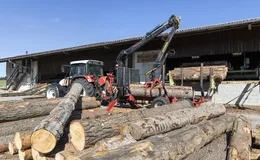
Foresters assure that there is still plenty of firewood on the market. Supply is provided by forest enterprises and administrations throughout the country, and alongside large forestry companies, smaller firms and local suppliers also sell wood. Price and service differences can be significant in various regions, which is why many households find online comparison tools helpful. These tools can locate nearby sellers and compare not only prices but also delivery parameters, including transportation.
Prices depend on the type of wood, its hardness, and especially the level of dryness. Hard raw wood, including delivery, is sold on average for 1,694 CZK per cubic meter, while hard dry wood costs around 1,873 CZK. For soft wood, the average price of raw wood is 1,258 CZK, and dry wood is 1,268 CZK per cubic meter. The difference between „dry“ and „raw“ wood is not just about heating comfort – it significantly affects the amount of heat a household actually gets from the fuel.
For wood to have the proper heat output, moisture must be removed. Generally, hardwood takes up to two years to dry, while softwood takes about one year. An exception is, for example, dry coniferous wood, which can be burned almost immediately.
Heating with wet wood is not cost-effective. It harms the environment and the household budget: burning moist fuel produces significantly more smoke, and part of the energy is used to evaporate water instead of heating. Nevertheless, some customers opt for cheaper raw wood because they do not want to pay extra for dry wood. However, experts point out that when recalculated based on delivered energy, heating with raw wood can be comparably expensive to heating with gas or a heat pump – even if the price per cubic meter appears advantageous at first glance.
Preferences for specific types of wood also play a role in decision-making. Households usually prefer hardwood such as oak, beech, ash, or acacia. However, in some regions, especially in mountainous areas, softwood is more commonly used for heating due to its local availability.
In addition to regular purchases, so-called self-production is also widespread, where people harvest, cut, split, and transport wood themselves from the forest. Through Lesy České republiky, up to 35 cubic meters of firewood can be purchased annually, which, according to foresters, should be sufficient to heat a family home for one winter. However, wood obtained this way is intended exclusively for personal use and must not be resold.
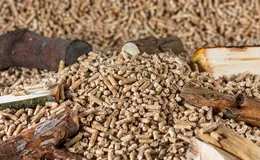
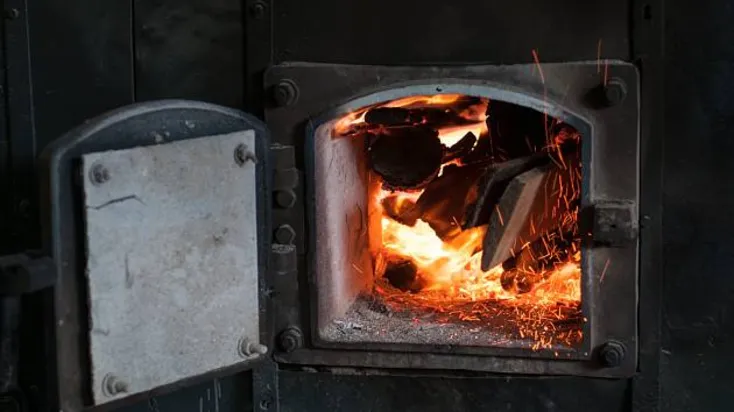
Special attention must be paid to legislation and technical regulations. Firewood can only be burned in boilers approved for this purpose. Experts warn against misleading information from some sellers who claim that lump wood can be burned in biomass boilers of the 3rd emission class. In reality, burning wood biomass – lump wood, chips, pellets, or briquettes – in these boilers is prohibited. Violating these regulations can result in a fine of up to 50,000 CZK, with responsibility lying solely with the boiler user, not the fuel seller.
Overall, foresters state that there is plenty of wood on the market, and thanks to comparison tools, it is easier today to monitor prices and delivery conditions. However, when making decisions, it increasingly holds true that the most important factor is not the price per cubic meter itself, but the actual heat output determined by dryness – and ensuring that the fuel matches the type of boiler used.