

yesterday at 12:29
,Germany
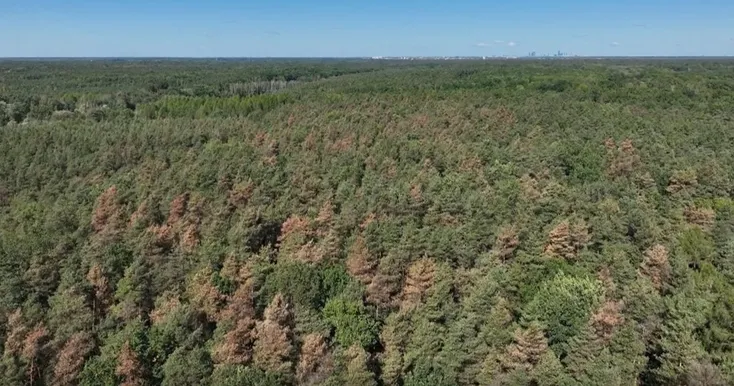
In the Chojnów Forest District, a dramatic situation has arisen, causing concern among both the local community and forestry specialists. The issue involves the mass die-off of pines around 90 years old, which has shocked foresters and residents of the region who have grown accustomed to a stable landscape over decades.
It all began with observations by Justyna Markowska from the Dobiesz Forestry Unit, who was the first to notice alarming changes in the tree population. Her report triggered a series of actions aimed at investigating the causes of this unfavorable situation. The goal was not only to understand the current state of the forest but also to find ways to save the trees.
Research using drones quickly revealed that the rate of pine die-off is alarmingly rapid. The primary suspicion fell on the extreme drought that has long plagued the region. Trees that had been able to withstand various weather conditions for years thanks to their deep root systems were, this time, unable to cope with the lack of moisture.
Dr. Eng. Cezary Kieszek explains that soil measurements show a dramatic situation: at the depth of the root system, where there should be moisture, there is complete drought. Pines growing on sandy soils typically rely on a so-called taproot, which allows access to water from deeper layers of the earth. Unfortunately, the current weather conditions exceed the adaptive capabilities of these trees.
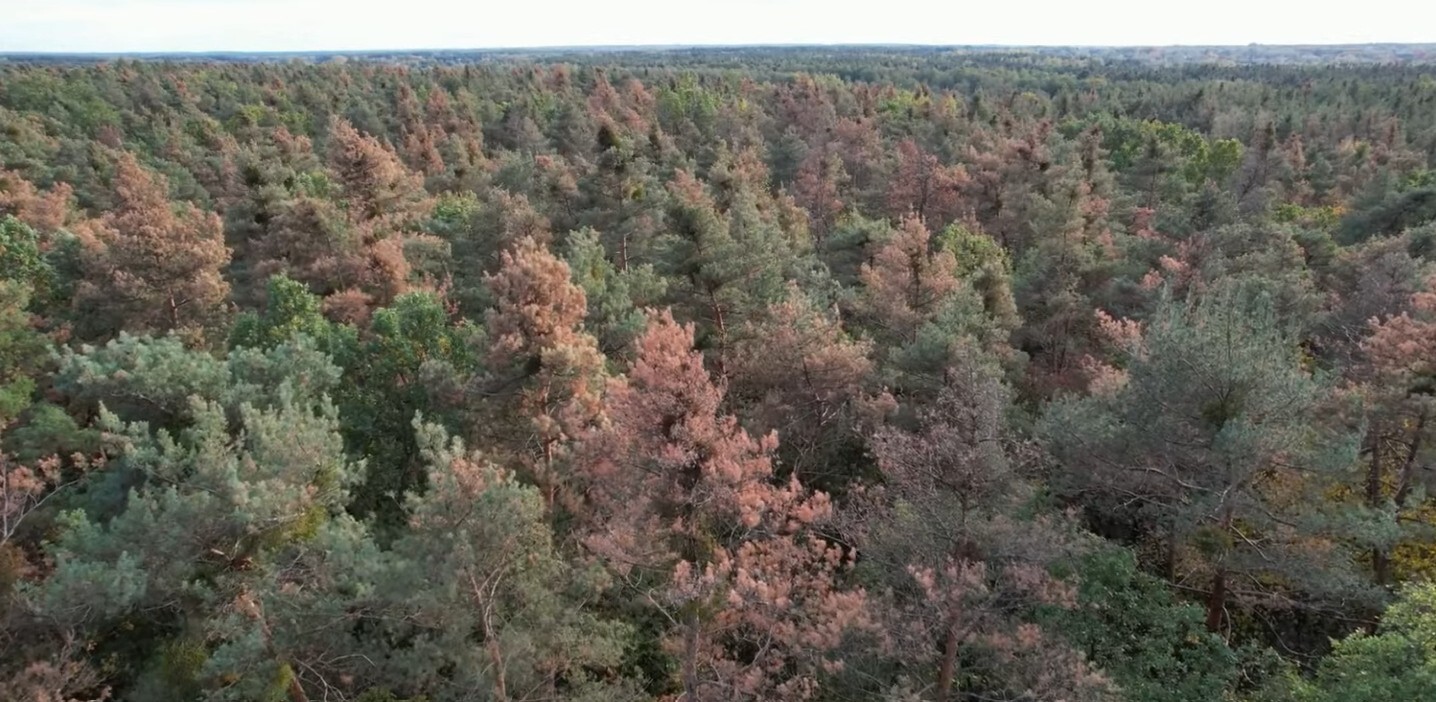
An additional factor worsening the situation is the presence of mistletoe, a parasitic plant that weakens the already exhausted pines. Mistletoe, drawing essential nutrients from its host, further reduces the trees' chances of survival.
The current situation demands urgent rescue actions, such as controlled irrigation or mechanical removal of mistletoe from the trees. Foresters are intensively working on a long-term forest revitalization plan. The strategy also includes educational initiatives to ensure local communities are aware of the impact of climate change on the surrounding nature.
The Chojnów Forest District, a victim of global climate change, serves as an example of the increasingly common problem of forest die-off worldwide. Research conducted in the region could serve as a valuable case study for similar situations in other parts of Poland and Europe. Now that the situation has been identified, swift action is crucial to protect the threatened tree population.