yesterday at 12:29
,Germany
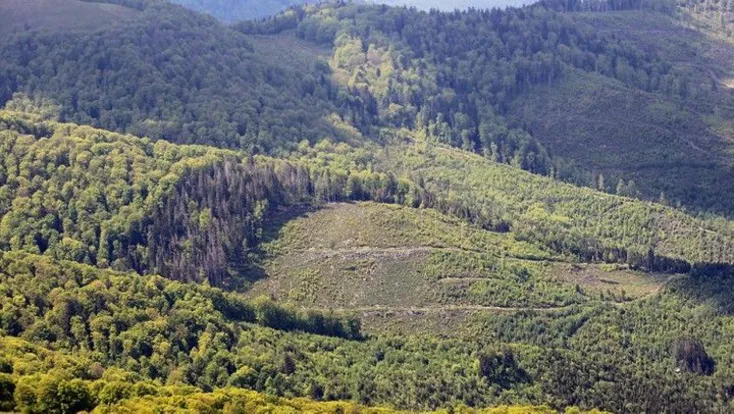
Small clearings of up to two hectares account for the largest share of carbon losses in the tropics. Although they make up only 5% of the total deforested area, they are responsible for 56% of carbon losses.
This is stated in the most detailed reconstruction to date of changes in carbon stocks in tropical forests over the period 1990–2020.
According to researchers’ estimates, over three decades tropical forests lost nearly 16 billion tonnes of carbon. The main losses occurred in moist, dense forests with high carbon concentrations. At the same time, intact forest areas continue to absorb carbon, but this uptake is only sufficient to maintain a balance close to neutral.
The study was prepared by a team from the French Laboratory of Climate and Environmental Sciences (LSCE). It covers three decades and makes it possible to assess separately both losses and gains of carbon in tropical forest ecosystems.
A key feature of the work was its methodology. Scientists combined satellite observations capable of detecting changes in areas smaller than one hectare with new models of biomass recovery. This made it possible to create maps of changes in carbon stocks with a spatial resolution of 30 meters—significantly more precise than in previous global assessments.
This approach allowed the researchers to account for the influence of the type of disturbance, its scale, and local climatic conditions on the speed and nature of forest recovery.
One of the study’s key conclusions concerns fragmented deforestation. Clearings of less than two hectares occur far more frequently than large-scale deforestation and often arise in areas with particularly high carbon stocks. Taken together, this leads to disproportionately large losses.
Unlike large industrial clear-cuts or major fires, such changes are often scattered and more difficult to monitor. They include, in particular, local agricultural expansion, livestock grazing, road construction, and the gradual spread of development.
Researchers note that many small clearings have long-lasting or irreversible effects. After such interventions, forests often fail to recover, which means a long-term loss of their capacity to absorb carbon. Moist tropical forests with high biomass concentrations remain especially vulnerable.
The study’s results are important for climate policy and nature conservation. They point to the need to strengthen monitoring of small-scale deforestation, improve infrastructure planning, and focus efforts on protecting forests with the largest carbon stocks.
The authors also place special emphasis on forest restoration. According to the data obtained, even small clearings can significantly affect the global carbon balance, and therefore supporting natural regeneration and the restoration of forest ecosystems is critically important for achieving climate goals.