Mondragón Opens in Álava the Largest Sawmill in Southern Europe to Lead the European Forest Industry
yesterday at 12:58
,Spain
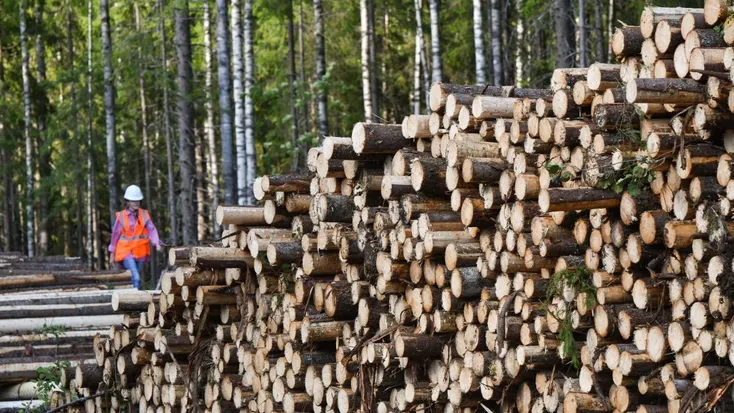
Conservationist organizations are raising alarms about a troubling trend: Spain has become a key entry point for illegal Russian timber into the European market, despite the embargo imposed by the European Union following the invasion of Ukraine. The embargo, designed as a clear response to Russian aggression and to cut off economic flows to Moscow, faces serious challenges due to sophisticated evasion methods.
According to recent complaints, Spain is not acting alone, but its position as one of the main European recipients of forestry products places it at the center of attention. Additionally, there are procedures designed to mask the true origin of the timber before it reaches European soil, jeopardizing the integrity of community restrictions.
One of the most commonly used strategies to bypass sanctions involves the use of third countries such as Turkey, Georgia, Kazakhstan, or China. Companies and operators exploit the lack of thorough controls at certain borders to repackage and relabel timber originating from Russia. Upon officially entering the European market, these shipments appear to originate from the intermediary countries, concealing their direct link to the Russian or Belarusian market. This process is known as triangulation and origin laundering.
Independent investigations, including the detailed report by Earthsight, have documented how Russian birch timber—subject to sanctions—has reached Spain after first being exported to China. From there, the merchandise is repackaged and documentarily altered to evade European Union regulations. These reports point to the involvement of Spanish companies that, while technically complying with customs paperwork, may be contributing to keeping this illegal import channel open.
The maneuver not only poses a legal and logistical challenge. It also raises serious ethical questions for the companies involved, which benefit from lower prices associated with uncontrolled logging, ignoring the environmental and social impacts perpetuated by their trade.
The situation comes at a delicate moment for European trade and environmental policy. Debates are ongoing in Brussels about potential modifications to the EU Regulation on deforestation-linked products, which some fear could weaken its current framework. Pressure from certain industrial and commercial sectors, citing excessive costs and administrative complexity, fuels the possibility of regulatory relaxation.
For environmental organizations, relaxing controls would be counterproductive. They fear it would further open the door to timber of dubious origin and perpetuate the cycle of illegal logging, deforestation, and trade laundering. The risk is significant: if the European system becomes permissive or ineffective, it not only undermines consumer and forest ecosystem protection but also erodes the principles of the Union’s foreign and trade policy.
Meanwhile, Spain and Europe face the dilemma of balancing the need for resources and the defense of the rule of law with environmental and geopolitical urgency. The rigor and ambition of their response will determine not only the effectiveness of the sanctions but also the future of European forests and the credibility of sustainability policies.