Mondragón Opens in Álava the Largest Sawmill in Southern Europe to Lead the European Forest Industry
yesterday at 12:58
,Spain
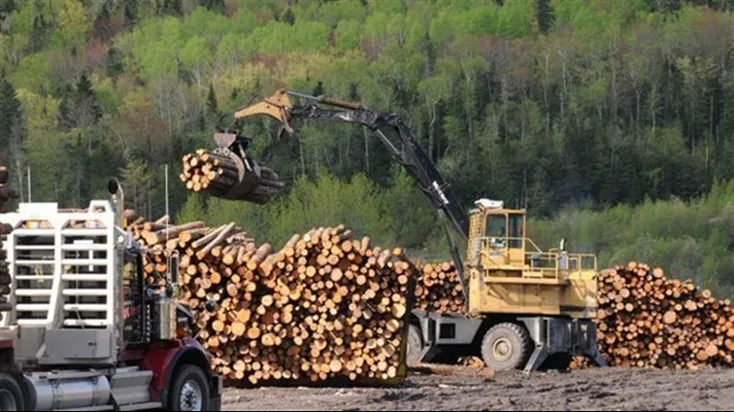
In September, Canadian softwood lumber exports to the United States saw a sharp decline, recording a 22% drop. The impact is even more significant as it comes with an 8% decrease in the price of Canadian lumber shipped across the border, a "double penalty" weighing on an already weakened sector. Against this backdrop, Ottawa is accelerating two strategies: boosting domestic demand through wood construction and diversifying markets toward Asia.
The decline is primarily due to reduced demand in the U.S. housing sector. Rising borrowing costs in a context of high interest rates are slowing housing starts and, consequently, the need for construction materials.
Adding to these cyclical factors are persistent trade tensions between the two countries, exacerbated by higher tariffs. Yet, the United States remains the primary export market for Canadian lumber, making the sector particularly vulnerable to the combination of an economic slowdown and unfavorable trade decisions. For producers, this structural dependence translates into increased volatility in both volumes and prices.
This situation adds further pressure on producers, who are already grappling with production cuts at their sawmills and raw material shortages due to forest fires. British Columbia, a historic pillar of the industry, is bearing the brunt of these supply constraints, which are reshaping operations and forcing some players to adjust their capacity.
The challenge is twofold: absorbing the shock of U.S. demand while securing a supply weakened by climate hazards and industrial limitations. The issue goes beyond mere cyclical trends; it touches on the resilience of a value chain increasingly subject to frequent disruptions.
To reduce reliance on the U.S. market, Prime Minister Carney is working to promote the use of wood in residential construction in Canada, aiming to stabilize domestic demand while accelerating the adoption of low-carbon construction techniques. Ottawa also seeks to make the capital a testing ground: a partnership between Carney and Mark Sutcliffe, mayor of Ottawa, aims to support the Build Canada Homes program. The agency, with a budget of 13 billion dollars, is tasked with developing public lands and promoting large-scale mass timber construction.
In parallel, Canada is actively seeking to diversify its international markets, notably through a recent trade mission to South Korea and Japan. The stated goal is to build strong partnerships in Asia to reduce dependence on the U.S. market, with long-term potential considered significant. The arguments put forward target markets sensitive to environmental performance: sustainable materials, low carbon footprint, certified forests, and a supply chain presented as stable. Several trade agreements have emerged from this effort, including strengthened supply commitments with Japanese importers and exploratory partnerships with South Korean companies specializing in mass timber.
This sequence highlights the complexity of economic relations between Canada and the United States, as well as the sensitivity of lumber flows to economic and political fluctuations. The transition to low-carbon construction techniques could, however, become a driver of stabilization in Canada and growth in Asia—provided that supply constraints linked to wildfires and sawmill capacity can be managed.