Mondragón Opens in Álava the Largest Sawmill in Southern Europe to Lead the European Forest Industry
yesterday at 12:58
,Spain
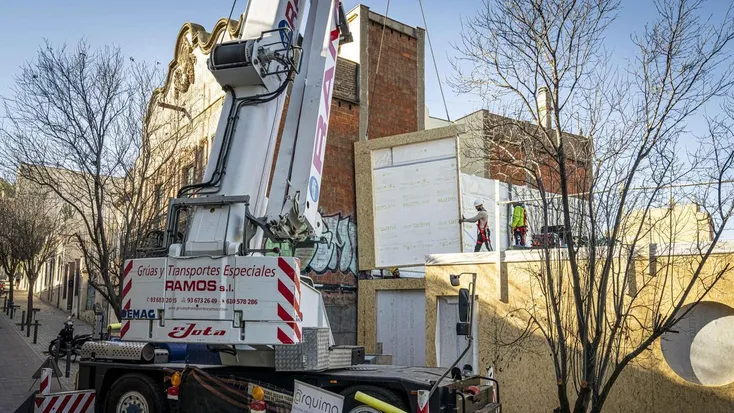
At the border of the Poble Sec neighborhood and Montjuic in Barcelona, a single-family home of 460 square meters across three stories stands out, breaking with traditional construction timelines. Thanks to an industrialized wood system, the complete assembly of the structure is carried out in just seven days.
“This Thursday, seven working days after placing the first to the last piece, the ‘construction’ will be finished,” explains Stefano Carlo Ascione, communications director at Arquima, a company specializing in industrialized wood construction. Instead of bricks, prefabricated pieces are used, allowing for fast and precise assembly, leaving only the interior finishes to carpenters and masons.
The project, commissioned by a private individual and designed by architect Ana Julibert, has an estimated cost of between 1,800 and 2,000 euros per square meter. As Ascione clarifies, “we only manufacture the pieces and assemble them,” while the design is handled by an external studio, adapted to the company’s operational capacity.
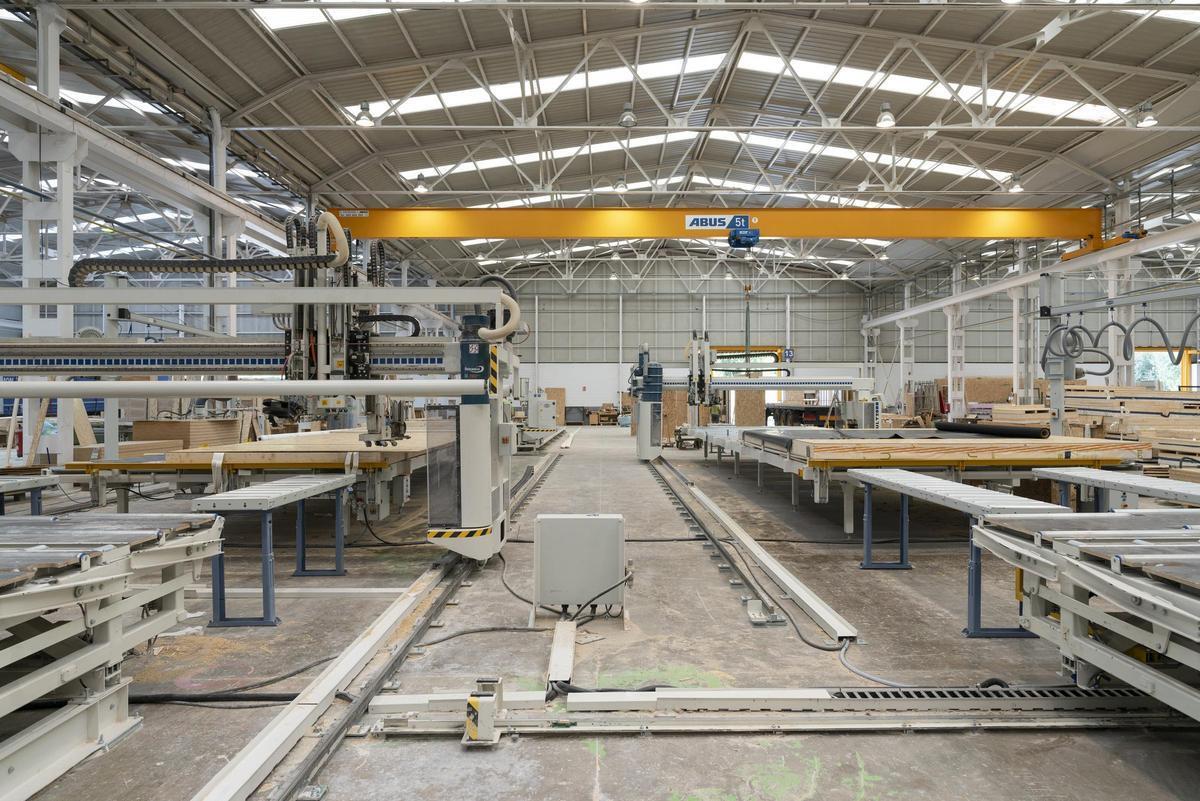
The process of an industrialized home begins long before assembly. First, the client agrees on a commercial proposal with a maximum deviation of 10%. Upon acceptance, a slot contract is signed, “an initial payment of about 15,000 euros that allows structural calculations to begin and the project to be set in motion.”
Technical adaptation and structural calculations can take between one and four months, depending on the architect’s efficiency. Subsequently, the project is modeled in BIM, a program that integrates every detail of the building and allows for the detection of collisions such as pipes or ducts in approximately one month. Finally, materials are purchased, fabrication takes place, and assembly is completed, wrapping up the cycle in a timeframe that can range from four months to a year and a half, depending on the client’s pace.
One of the most notable aspects is the use of local wood: previously, spruce was imported from Austria, but now pine from Teruel is used, processed in a local sawmill and transported to Arquima’s factory in Abrera, Barcelona, which produces around 60,000 square meters of construction elements per shift. The company considers a project to be profitable starting from 150 square meters of built area.
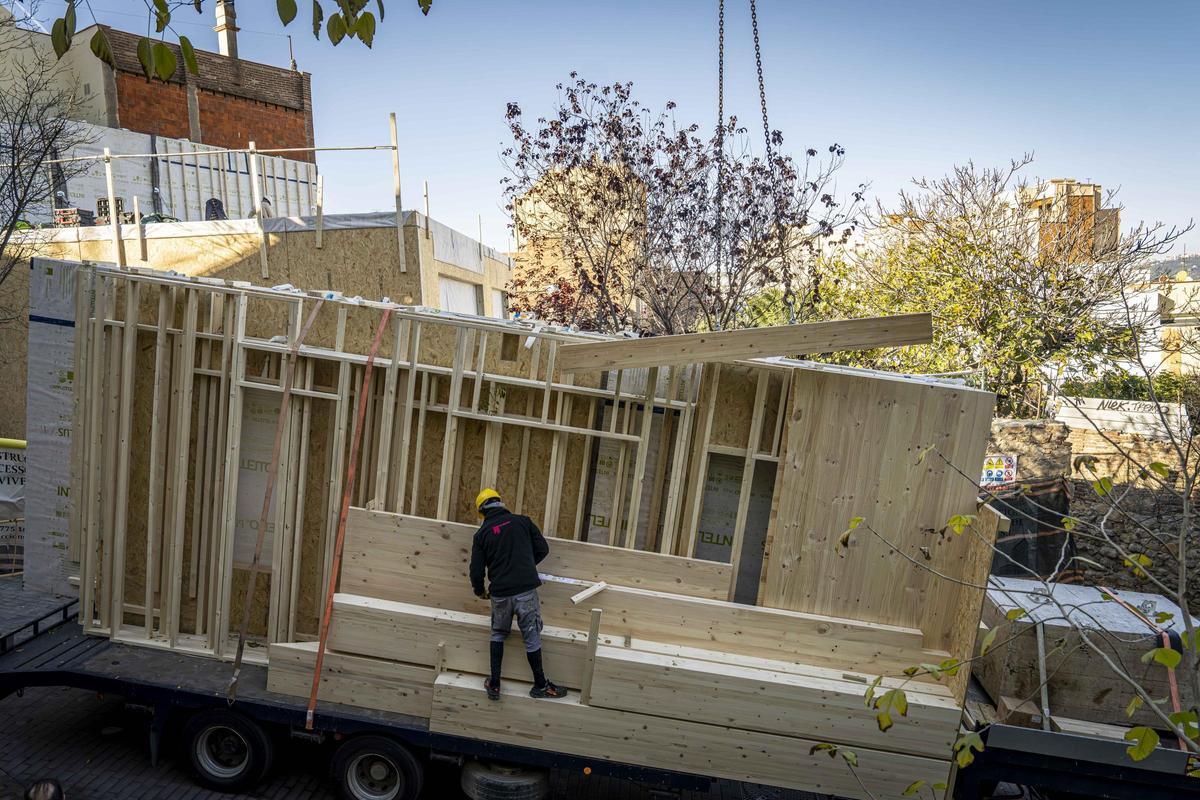
The use of wood not only speeds up construction times but also provides significant environmental benefits. According to internal studies by Arquima, “wood systems record emissions of around 414 kgCO₂eq/m² over 50 years, far below the 770–1,000 kgCO₂eq/m²” of steel or prefabricated concrete solutions. Industrialization with wood can reduce emissions by 45% to 60%.
Additionally, wood offers more predictable behavior in the face of fire: “The conifer used in this building carbonizes at a rate of 0.7 mm per minute,” explains Ascione. The layer of charcoal that forms protects the structural core and maintains load-bearing capacity for a longer time.
Regulatory momentum also supports this type of construction. The draft of the new Technical Building Code (CTE) will require the declaration of building emissions starting in 2026, with an expected threshold of 500–600 kgCO₂eq/m². Combined with the European Directive on Energy Efficiency and the PERTE plan for housing industrialization, these projects position themselves as more sustainable, safe, and capable of addressing the labor shortage in the sector.
As Ascione concludes, “an industrialized single-family home won’t be cheaper than a traditional construction, but it does manage to be more sustainable, safer, and, above all, to alleviate the labor shortage in the construction sector.”