
11 Jun 2026
,Spain
The wood sector is consolidating in Aragón as a strategic activity for rural areas and forest management. The region has 171 wood companies that generate nearly 2,000 jobs and carry out activities as diverse as forest exploitation, carpentry, furniture manufacturing, biomass, packaging and housing construction. A productive fabric that rests, for the most part, on family SMEs closely linked to the rural environment.
The potential of the sector is rooted in the Aragonese geography itself: the community has 2.7 million hectares of forest, which represents almost 60% of its territory. This extension makes forest management a key element against climate change and the growing threat of fires. Each province also has a differentiated profile: Zaragoza concentrates the processing industry and logistics; Huesca stands out for forest exploitation in the Pyrenees, and Teruel excels in biomass, structural timber and sawmills.
However, the industry is not without difficulties. The lack of specialized labor, generational renewal problems, delays in license processing and criticisms of a public auction system that does not always favor local companies are among the main challenges facing sector companies. Added to these is the impact of energy volatility on production and distribution costs.
«With the Strait of Hormuz and the rise in fuel, we see that it is affecting us quite a bit more.» — Representative of the Aragonese wood sector
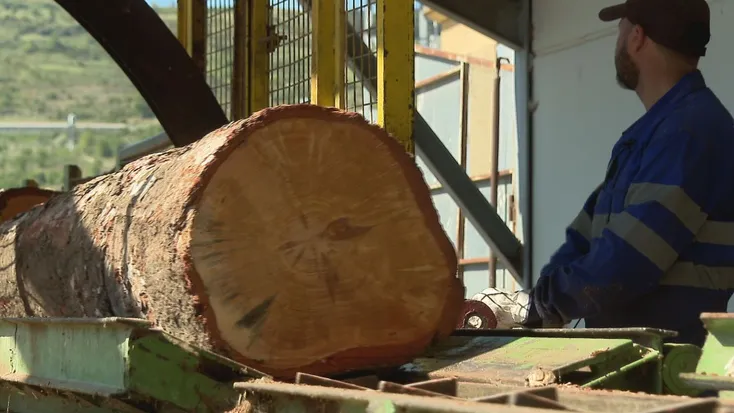
The recent history of the sector has been marked by the adaptability of its companies. In Albarracín, one of Teruel’s oldest sawmills remains active, founded in 1960 and dedicated to turning pine into slats for other industries. In Cantavieja, a sawmill that was hit hard by the 2008 construction crisis chose to reinvent itself and began producing pallets and packaging distributed throughout Spain, a shift that allowed it to survive and grow in a different market.
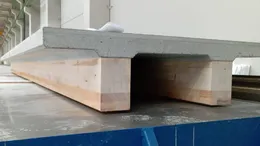
The versatility of wood as a material is also driving demand in carpentry workshops in Aragón and Catalonia, where it is used for furniture, flooring, doors, kitchens and other housing elements. At the same time, wood is gaining ground in construction as an alternative to concrete, valued for its insulating properties, strength and ability to shorten construction times and reduce labor costs.
The dynamism of the sector is also reflected in foreign markets. Aragón is one of the regions where furniture exports are growing the most, with an increase of nearly 40% in recent years, ranking second only to Galicia in growth rate.
At the same time, the construction of homes with wooden structures is gaining followers as a fast, efficient and economically competitive system compared to traditional building methods. The reduction of several months in execution times translates directly into a lower final price for the client. In San Mateo de Gállego, a company has been building houses with wood imported from Austria and Germany for 25 years and precisely quantifies that competitive advantage.
«The difference between a conventional house and one of these can range between 400 and 500 euros per square meter.» — Manager of a timber construction company, San Mateo de Gállego
A saving that, in a context of widespread housing price increases, is becoming increasingly difficult to ignore.