
yesterday at 12:29
,Germany
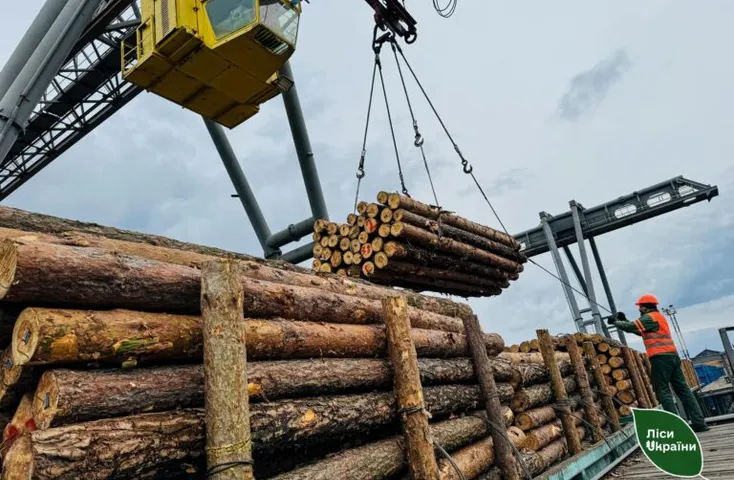
Ukraine plans to increase timber harvesting volumes in 2026–2028, while directing additional revenues toward reforestation and the creation of new forests. The government positions this approach as an attempt to balance the supply of raw materials for industry with the promise of preventing a reduction in forest cover and transitioning to natural forestry.
According to the announced targets, harvesting is set to increase by 1.3 million cubic meters in 2026, with the growth potentially reaching up to 5 million cubic meters annually by 2028. The year 2026 is defined as the starting and pivotal year for implementing this policy.
The government’s main economic argument is the underutilization of Ukraine’s wood processing industry. According to officials’ estimates, industry enterprises have the capacity to process twice as much raw material as they currently receive. It is also emphasized that the resource base allows for increased harvesting: in EU countries, up to 90% of annual forest growth is utilized, while in Ukraine, it is less than half.
The implementation of the reform is linked to the State Enterprise «Forests of Ukraine», which manages about 70% of the country’s forest fund. The corporatization of the enterprise is seen as a tool to attract investment and support further development of the sector.
Additional revenues from increased harvesting are promised to be directed toward expanding forest areas. One of the arguments is Ukraine’s low forest cover — around 15%, which is significantly lower than in most neighboring countries.
At the same time, the government assures that the increase in harvesting will not lead to widespread clear-cutting. A transition to natural forestry is declared, including replacing clear-cutting with transformation felling, which is expected to promote the formation of mixed, multi-aged forests. The key promise is to increase harvesting volumes without reducing forest cover.
Another mechanism for increasing harvesting is deregulation, including the simplification of permitting procedures, which are considered overly complex and a barrier to effective forest management.
To retain raw materials within the country, the government has decided to extend the licensing regime with zero quotas for the export of unprocessed timber. This restriction will remain in place throughout 2026 and is intended to prioritize domestic processing.
The effectiveness of this policy will be evaluated based on the actual harvesting volumes in 2026, the results of deregulation, the pace of new forest creation, real changes in felling approaches, and the impact of zero quotas on supplying the wood processing industry. The key challenge remains striking a balance between the economic goal — increasing resources for processing — and ecological guarantees regarding forest quality and the preservation of forest cover.