
yesterday at 12:29
,Germany
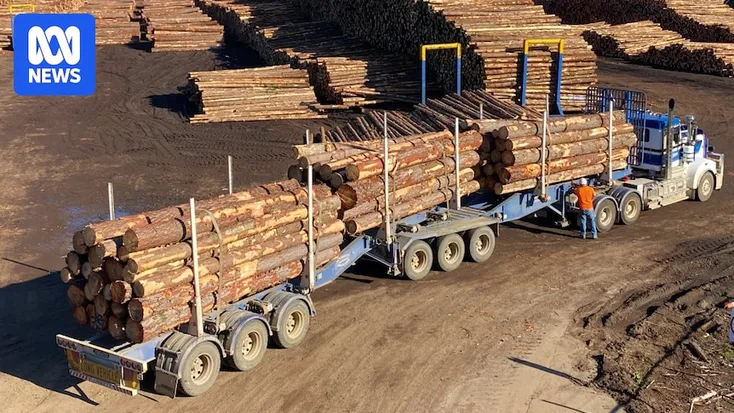
In an innovative response to the global push towards sustainable energy, South Australia's forestry industry is making headway in turning timber waste into a viable source of fuel for aviation and shipping. This groundbreaking concept not only aims to reduce dependence on traditional diesel fuels but also aligns with the larger goal of mitigating carbon emissions. As industries worldwide pivot towards cleaner energy solutions, this initiative marks a significant stride forward for the country’s green energy aspirations.
Aligned with Australia’s national climate objectives, the federal government has earmarked biofuel development as a central component of its strategy to achieve the 2035 climate targets. The government has introduced the $1.1 billion Cleaner Fuels Program, designed to boost the development and manufacture of low-carbon liquid fuels, thus underpinning efforts to transition successfully to a more sustainable energy matrix. With these financial and policy measures, there is an optimistic atmosphere within the industry concerning the potential expansion and impact of biofuel technologies.
Key leaders within the forestry industry, like Nathan Paine, chief executive of the South Australian Forest Products Association, emphasize the importance of forming strategic partnerships with biofuel manufacturers. Such collaborations are crucial for reducing waste, a major challenge in forestry operations. By aiming to "utilise every stick of fibre domestically," as Mr. Paine asserts, the industry is poised to substantially cut down on forestry waste by converting it into useful energy.
Paine's belief in the potential of these partnerships is underscored by the aspiration to effectively harness leftover residues from logging activities. The expectation is that current agreements and future collaborations will greatly enhance the capacity to recycle and repurpose artifacts from the timber industry, thus contributing to a circular economy model.
The role of companies like OneFortyOne, which owns expansive pine plantations across the Green Triangle region, is pivotal in this sustainable transition. These industry players provide critical mass and raw material necessary for biofuel production, setting the standard for sustainable forestry practices by emphasizing waste reduction and resource optimization.
By maximizing the use of timber waste, the industry not only unlocks new energy sources but also fosters innovative solutions to pressing environmental concerns. This dual benefit—boosting renewable energy supply while enhancing industry sustainability—dovetails neatly with Australia's climate ambitions, promising positive outcomes for both the economy and the environment.
The forestry sector’s commitment to biofuel development is representative of a broader movement within Australia towards clean, alternative energy sources. As part of the Cleaner Fuels Program, stakeholders are encouraged to advance technologies that will enable the production of biofuels on a commercial scale. This progression towards large-scale biofuel production is vital not only for achieving climate targets but also for establishing Australia as a leader in renewable energy innovation.
Ultimately, the transformation of timber waste into aviation and shipping fuel could serve as a catalyst for further research and development in other sectors, inspiring a wave of innovation and eco-friendly practices. With continuous government support and industry collaboration, the future looks promising for biofuels as a significant player in Australia’s energy landscape.
As these initiatives take root, the discourse surrounding biofuels becomes increasingly relevant for policymakers, researchers, and industry leaders. The success of such programs could potentially render Australia a case study in sustainable energy practices, demonstrating the efficacy of public-private partnerships in addressing global environmental challenges.
In summary, South Australia's drive to convert timber waste into biofuel epitomizes the synergy between innovation and sustainability, pointing towards a future where forestry waste is not just managed, but valorized as a crucial component of the renewable energy solution.