
yesterday at 12:29
,Germany
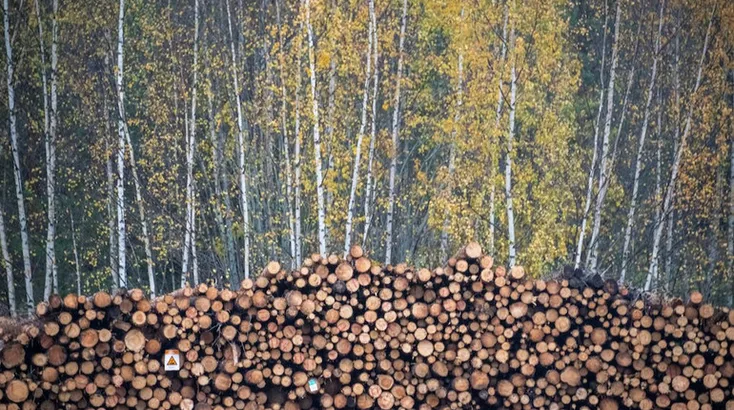
Sweden and Finland have issued a joint statement urging the European Commission to revise its current approach to climate policy. Particular attention was drawn to the restrictions imposed on deforestation. Both countries, where forestry plays a significant role in the economy, express concern about the potential damage that existing regulations could cause. They believe this could impact not only their economic growth but also the preservation of jobs in the forestry sector.
The European Union has set an ambitious goal to become the world's first climate-neutral bloc by 2050. Forestry plays a crucial role in achieving these targets, as forests act as natural carbon sinks, reducing emission levels. Nevertheless, the leaders of Sweden and Finland emphasize the need to reconsider strict deforestation restrictions to support local economies. In this context, Swedish Prime Minister Ulf Kristersson and Finnish Prime Minister Petteri Orpo have officially sent a letter to the President of the European Commission to express their concerns.
They noted that the "current regulations" could have a "serious impact on the forestry sector" in both countries, stressing the importance of striking a balance between climate goals and economic interests.
The letter sent represents a significant effort to highlight the importance of sustainable forest management within the EU's broader climate neutrality strategy. Finland and Sweden emphasize that adopting a more flexible and adaptive approach would help sustain economic growth in the forestry sector and preserve jobs without jeopardizing climate commitments.
Achieving a balance between economic development and environmental goals is a complex challenge, especially for countries where forestry is a cornerstone of the economy. In a context where global climate change demands urgent international action, finding compromises becomes even more critical.
Supporting the sustainable development of the forestry sector, as believed in Sweden and Finland, can and should align with strategies to reduce emissions and protect the environment under the EU's climate policy. These countries propose that sustainable forest management be considered a strategic priority in achieving climate goals, given its significant role in reducing atmospheric carbon levels.
Despite efforts to achieve climate neutrality, all EU member states must take into account their unique economic and environmental circumstances. Such an approach could help balance international commitments with national interests.