
yesterday at 12:29
,Germany
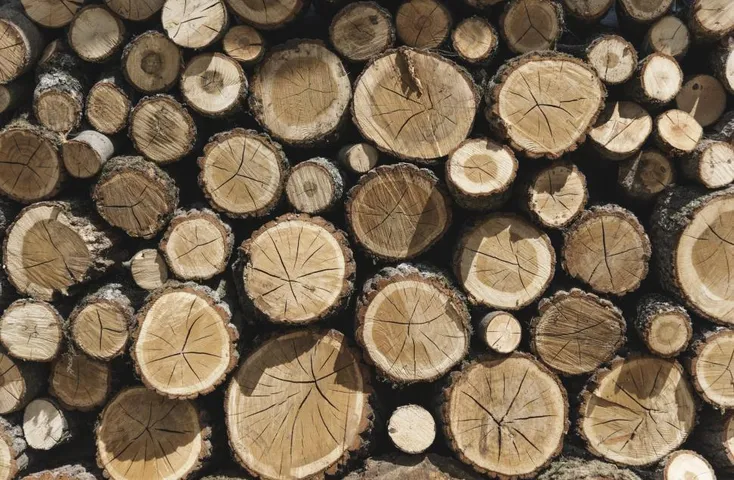
Timber harvesting in Romania experienced a significant decline last year compared to the previous year, evident in both the total volume and within hardwood species. This downward trend reflects major changes in the forestry sector, with implications for the local economy and the environment.
According to economic reports, industry operators have reported a 2.5% reduction in the volume of harvested timber compared to 2023. In particular, roundwood, essential for many industries, saw a 2.1% decrease in harvested volume.
Specifically, the total volume of harvested timber last year amounted to 17,526 thousand cubic meters, marking a decrease of 456 thousand cubic meters compared to 2023. This reduction was particularly felt in the segment of debarked roundwood, which totaled 16,194 thousand cubic meters, down by 355 thousand cubic meters from the previous year. These figures indicate a contraction in industry activities, with potential effects on prices, export markets, and the incomes of communities dependent on timber harvesting.
Despite this general decline, some notable increases were observed for certain species. For instance, the volume of timber from coniferous species rose by 154 thousand cubic meters, reaching a total of 6,561 thousand cubic meters. Oak also saw an increase, recording a gain of 74 thousand cubic meters and totaling 1,749 thousand cubic meters. These increases can be attributed to market demand and favorable market conditions for these species, as well as possible regulations that have altered harvesting practices.
On the other hand, declines were evident for some popular species such as beech, which recorded a drop of 276 thousand cubic meters, with its volume reaching 5,030 thousand cubic meters last year. Various hard and soft species also experienced reductions, by 72 thousand cubic meters and 235 thousand cubic meters respectively, reaching volumes of 1,881 thousand cubic meters and 973 thousand cubic meters in 2024.
These fluctuations in harvested timber volume are significant, necessitating a better understanding of their causes and effects. Factors such as forestry legislation, climate change, international market demand, and conservation initiatives may play a central role in determining these trends. It is crucial for economic operators and decision-makers to analyze these variables to adapt to market changes and protect forest resources for the future.
In conclusion, the decline in harvested timber volume in Romania is a clear signal of transformations in the forestry sector. Although some species have seen increases, the overall trend is one of reduction, highlighting the need for adaptive strategies for the long-term sustainability of forest resources. It is essential for decision-makers to collaborate in balancing economic demands with ecological requirements, ensuring that Romania's forests are not merely an exploitable resource but an integral part of the country's natural heritage.