
yesterday at 12:29
,Germany
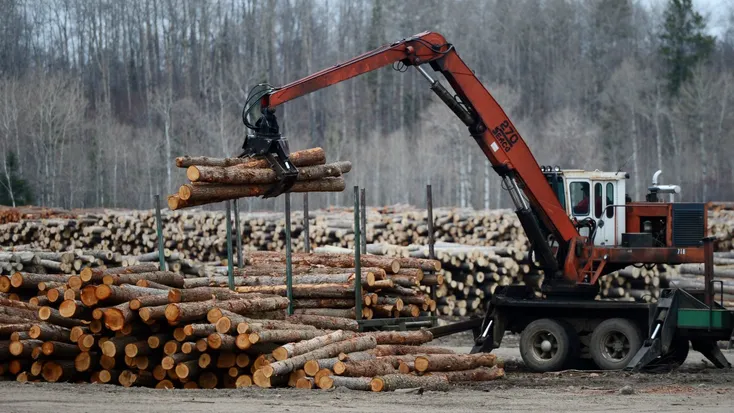
The Quebec lumber industry is going through a particularly tough period. Over the past few months, the economic crisis tied to the slowdown in the United States has intensified, and in the last three weeks, its effects have become even more pronounced. Prices continue to drop, with a collapse in demand on the Canadian market, particularly in Ontario. «The intensity of the crisis… has escalated significantly in the last three weeks», says André Gilbert, head of Boisaco.
For industry players, the support measures will not be enough to save the sector. «We are still assessing the impact of these measures, but we know they won’t be what saves the industry. It’s like a drop in the ocean with prices continuing to fall and demand slowing down», emphasizes André Gilbert.
The same sentiment is shared by Réjean Paré, head of Arbec: «Like André Gilbert, I believe that government support will not be sufficient to help everyone get through the crisis and, more importantly, to prepare for a way out of it.»
Companies must manage their inventories with great caution. The sudden drop in demand in Canada is forcing sawmills to reevaluate their production. «Right now, we need to manage the various inventories with a lot of caution», explains Réjean Paré.
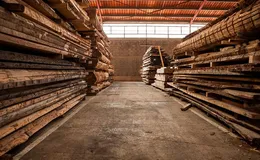
The situation is made even more delicate by the fact that lumber is a perishable product. «It deteriorates over time when it sits in the yard for too long… We have to sell it at a lower price», clarifies André Gilbert. This context forces sawyers to make strategic choices to produce items that sell quickly.
In the United States, the market remains sluggish, with a cumulative two million housing starts. American demand, though crucial, remains weak. «When the price of lumber was $1,500 per 1,000 board feet, Americans were buying it. Today, there’s no demand. But it’s the COVID-19 virus that has allowed the Quebec industry to survive until now», notes Réjean Paré.
For him, the real obstacle is not the surcharge imposed by Donald Trump, but an outdated Quebec forestry regime. «Our worst enemy this morning… is on the ground with a forestry regime that hasn’t been modernized and remains cumbersome and problematic», he asserts. Paré advocates for a restructuring of the industry to reduce Quebec’s exposure to the American market and to decarbonize the economy. According to him, an upcoming surplus of wood chips could further drive down prices and penalize sawmill companies.
The decline in demand in the major Toronto market, the economic heart of Canada, illustrates the general slowdown. «Under normal circumstances, the delivery ratio for lumber is one 45-foot load in the Ottawa region for every 10 loads in the greater Toronto area. In recent weeks, the ratio has shifted to 1 for 1», explains Jean-Pierre Girard of Scierie Girard.
In this context, companies have no miracle solution: inventory management and the careful selection of products remain their main tools to weather the crisis.