yesterday at 12:29
,Germany
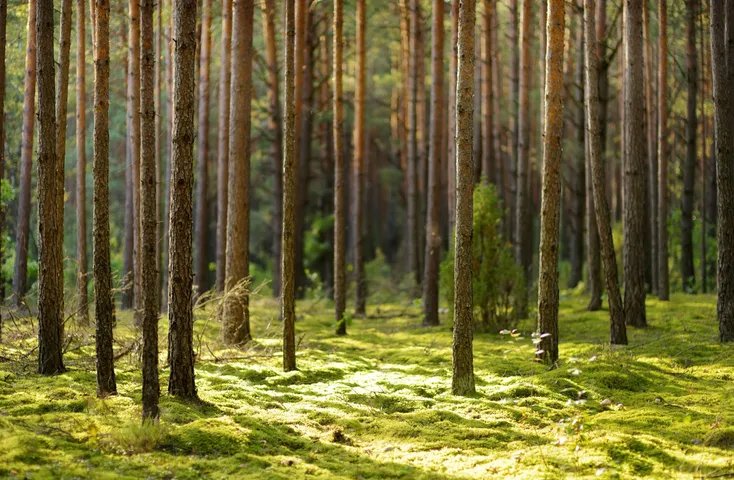
Lithuania's forests continue to expand — in 2025, the area of forest land increased by 2,562 hectares to reach 2,212,972 hectares, according to the State Forest Cadastre. This year, approximately 300 hectares of new plantations were created: 140 hectares of state-owned land and 160 hectares of private land.
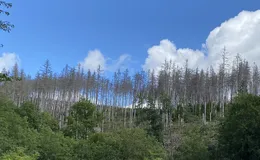
At the same time, the volume of timber is also growing. The growth in trunk wood for the year amounted to 19.59 million cubic meters, while 9.84 million cubic meters were cut down in private estates and nature reserves — half of the annual growth. Another 24.6% of trees died from natural causes — disease, pests, natural disasters, and old age.
Mindaugas Tarnauskas, Director of the State Forest Service (VMT), notes:
“Taking into account both human activity and natural factors, it is clear that we accumulate a quarter (25.4%) of the total wood growth in forests. Every year, the accumulated biomass of trees increases by 0.85%.”
More than a third of the volume of wood in forest groups III–IV is accumulated in mature stands, the average age of which is 80 years. The oldest mature oak stands in commercial forests reach an average age of 164 years, ash stands — 133 years, pine stands — 116 years, and spruce stands — 96 years.
In terms of area, the largest mature commercial stands are birch (118,600 ha), spruce (78,000 ha), and pine (74,000 ha), with a minimum felling age of 61, 71/81, and 101/111 years, respectively.
Commercial activity is not permitted in all forests: it is completely prohibited in nature reserves and strictly limited in ecosystem protection forests and recreational areas. For 2026, the Minister of the Environment has set a 5.7% lower rate for primary and intermediate logging in state forests — the largest reduction in the last decade. This rate no longer includes mature forests of group II, which will be left for natural development.
Lithuania is seeking to increase the country's forest cover by encouraging residents to reforest land overgrown with self-sown trees. Owners of such plots can apply for support: €4 million has been allocated for subsidies from the Climate Change Program.
The Climate Change Program's investment plan for 2026-2029 allocates €54.52 million for:
Gintaras Kulbokas, head of the National Forest Inventory Department at VMT, predicts that this year's tree mortality statistics will be lower thanks to a wet and cool summer, which has reduced the population of the bark beetle.
The latest data from the state forest inventory, which will be published in early 2026, should confirm the positive trend, indicating the steady growth of Lithuanian forests and the accumulation of wood biomass.