yesterday at 12:29
,Germany
Half a century ago, climate change was already a topic of public discussion. Back then, the focus was primarily on the issue of acid rain, caused by emissions from the burning of lignite. It was a time when discussions about environmental pollution and its consequences were gaining increasing importance.
Today, however, the focus has shifted. The drastic reduction in lignite combustion has contributed to alleviating acid rain. Yet, the challenges of climate change have become far more complex. This is not least due to the enormous damage that forests have suffered as a result of advancing climate change.
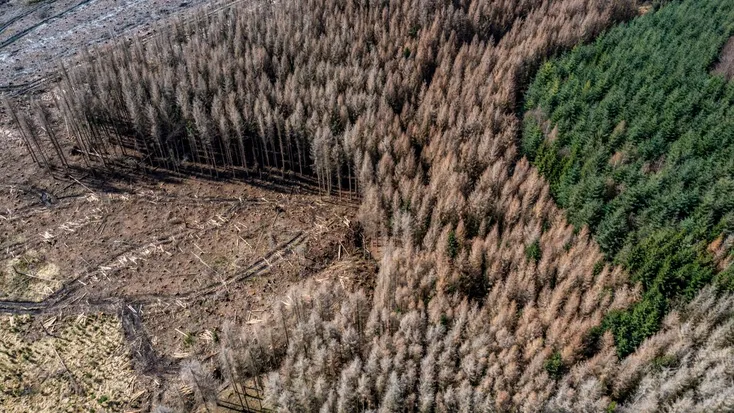
Between October 2017 and March 2022, approximately 255 million cubic meters of damaged wood were recorded in Germany. This figure speaks volumes about the extent of the damage caused by extreme weather conditions such as storms and prolonged drought periods in the forests. The destruction is immense and has severe impacts on the ecosystem.
In addition, more than 500,000 hectares of forest have died off during this period. That is an area almost twice the size of Saarland. These drought periods and weather extremes pose enormous challenges to the forests and jeopardize their survival.
Trees are increasingly suffering from climatic changes. Extreme drought, in particular, is taking a toll on them. This opens the door to secondary pests such as bark beetles and jewel beetles. These insects use weakened trees as breeding grounds, leading to further deterioration of forest health. Alongside the pressure from insects, the risk of wildfires is also increasing, becoming more intense and frequent due to the recurring heatwaves. These phenomena highlight how closely the condition of the forests is linked to advancing climate change.
The poor condition of the forests is largely attributable to climate change. This is primarily caused by greenhouse gas emissions, which continue to occur at a high level worldwide. The consequences for biodiversity and the stability of forests are severe and require urgent action.
Spruce and fir trees are particularly sensitive to the changing climatic conditions. These tree species are among the losers of climate change, as they are less drought-resistant and often succumb to rising temperatures and persistent drought periods. Adapting forests to these new conditions represents a major challenge but also necessitates sustainable planning and implementation.
To combat the progressive forest dieback and extreme climatic influences, intensified global efforts are needed to reduce greenhouse gases and promote more resilient forest structures. The current situation demands not only a change in thinking but also concrete action to preserve the valuable forest ecosystem for the future.