Mondragón Opens in Álava the Largest Sawmill in Southern Europe to Lead the European Forest Industry
yesterday at 12:58
,Spain
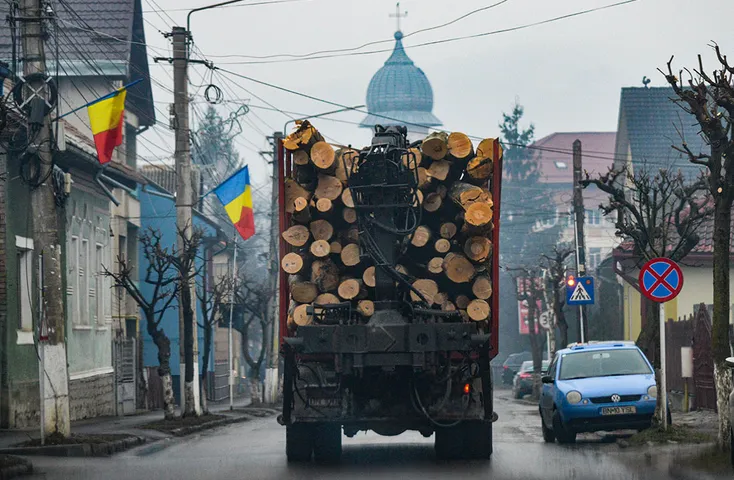
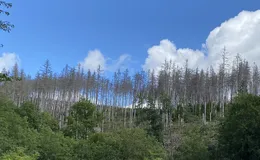
According to the latest data from the National Forest Inventory, Romania's forests have grown in recent years both in terms of area and wood volume, signaling a robust forest resource. However, in 2024–2025, the phenomenon of tree drying has intensified, a development that puts pressure on management capacity and could quickly alter the favorable outlook.
The area of forests, forest vegetation, and land with trees has increased by approximately 500,000 hectares, a leap comparable in magnitude to the area of agricultural land lost between 2010 and 2020. At the same time, productivity remains high: Romania's forests produce around 59 million cubic meters of timber annually, with a growth rate nearly double the European average, an indicator interpreted by specialists as a sign of overall good condition.
Another benchmark is the wood stock: the average volume has reached 348 cubic meters per hectare, far above the European average of approximately 160 m³/ha and close to the level of Switzerland, one of the countries with dense and well-preserved forests.
Of the reported annual growth, a significant portion does not represent healthy "new" accumulation but rather volume resulting from natural drying: approximately 17 million cubic meters are attributed to this phenomenon, while the real net accumulation in forests is around 15 million cubic meters. This difference highlights the growing role of drying trees in forest statistics and raises questions about the optimal pace of intervention.
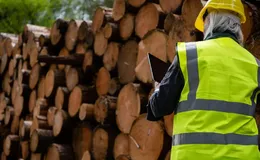
On the economic chain, a discrepancy between harvesting and what actually reaches the commercial circuit is also notable. On average, 28 million cubic meters of wood are harvested each year, but only 18–19 million cubic meters enter the market; the remainder consists mainly of stumps, branches, and other residues. The issue of efficiency—how much is inevitable and how much relates to logistics or technology—remains open.
Overall, Romania exploits its forests relatively cautiously compared to their growth: only 44% of the annual growth is harvested, compared to 63–66% in other European countries. Against the backdrop of this exploitation level and conservation policies, large volumes of "dead wood" also accumulate, playing an important ecological role for biodiversity. Over half of the forests are managed according to international standards that require retaining dead wood to maintain ecosystems, though part of this accumulation is also fueled by natural drying.
The data indicates that in 2024–2025, the drying phenomenon has intensified, and the risk highlighted by specialists is that the affected volumes may exceed the "exploitation possibility"—that is, the sustainable and legal limit for interventions. Such a scenario could lead to rapid accumulations of dry wood material, with long-term effects on forest health and additional pressures on management (prioritizing operations, extraction capacities, biodiversity protection).
The overall picture remains positive: Romania's forests are more extensive and richer than ever. However, the acceleration of drying and the accumulation of dry wood, against the backdrop of climate change, underscore the need for more dynamic management, adapted to risks that could intensify from one year to the next.