
yesterday at 12:29
,Germany
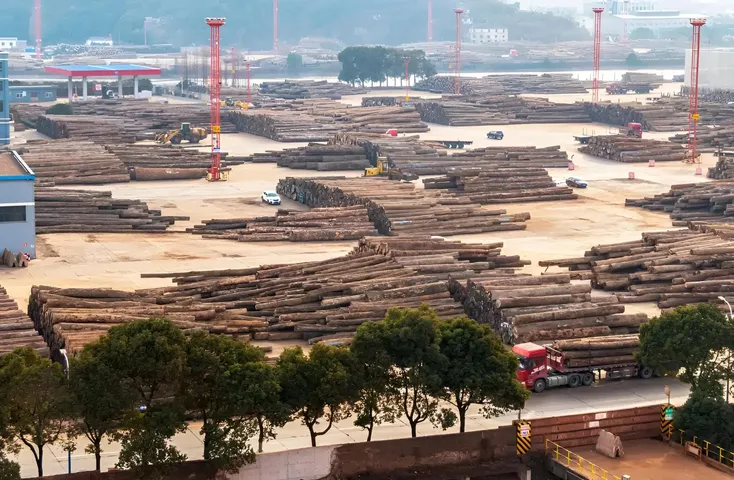
China has restored its log trade with the United States, marking a significant turning point for the global timber market and signaling renewed cooperation between the world’s two largest economies.
The decision comes after China had suspended all raw log imports from the U.S. in March 2025 due to concerns over pest infestations, specifically citing bark beetles and longhorn beetles found in shipments. Prior to the ban, China was a major importer of American timber — accounting for 40% of U.S. hardwood and 38% of its softwood exports. The ban therefore had major implications for U.S. log exporters and global supply chains alike.
The General Administration of Customs (GAC) announced the reversal of this ban after what it described as "an evaluation of the corrective measures taken by the US side" to address its phytosanitary concerns. A statement from the GAC clarified that the decision complies with "relevant Chinese laws, regulations, and international standards on phytosanitary measures." The policy change took effect on Monday, November 10, 2025.
The move is widely seen as part of a broader thaw in U.S.-China relations. It follows a 12-month truce agreed between U.S. President Donald Trump and Chinese President Xi Jinping — a welcome pause in the trade tensions that have rippled across global markets for several years.
High-level negotiations in Busan, South Korea, played a pivotal role in the de-escalation. During those talks, the two leaders agreed not only to restore log imports but also to institute a temporary suspension on control measures involving other strategically important materials. These include rare earth elements, super-hard materials, lithium batteries, and graphite anodes — all critical components in electronics and clean energy technologies.
For industries on both sides of the Pacific, the restoration of log trade represents more than just a reopening of exports; it is a positive indicator of economic cooperation and mutual trust. Analysts suggest this could lead to further easing of restrictions and perhaps even a renegotiation of broader trade terms.
The U.S. timber sector, in particular, will likely benefit immediately. As shipments resume, exporters hope to recover losses endured during the months-long suspension, while supply chain partners — from shipping companies to sawmills — welcome the policy shift as a sign of stability.
Though the trade truce is temporary, these developments illustrate a pragmatic approach from both governments: addressing immediate economic interests while mitigating long-standing political differences. Whether this signals a long-term improvement in bilateral relations remains to be seen, but for now, the world’s timber traders have reason to breathe a little easier.